
Conference Panel Sessions
Collaboration or Conflict? Navigating Industry–Academic Engagements
7 December - Panel Session
-

-
-
-
Avneet AroraHDFC Life

Co-Teaching with AI: How Far Can (Should) We Go?
8 December - Panel Session
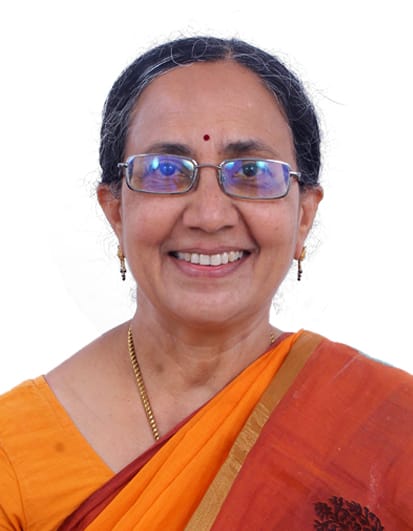
Moderator
Chitra Babu
Guest Faculty — IIT Madras
Chitra Babu is currently serving as a Guest faculty at IIT Madras, Chennai. She served as the Professor of the Department of Computer Science and Engineering at Sri Sivasubramaniya Nadar (SSN) College of Engineering for 19 years, in which she took the role of the Head of the department for 15 years. She received her Ph.D. from IIT Madras and MS from The Ohio State University, USA. She has worked in AT&T Bell Labs at Columbus, Ohio, USA. She has published over 75 research papers in refereed international journals and in the proceedings of international conferences. She has graduated 5 Ph.D scholars. Her research interests are in building data-intensive distributed systems making use of Software Engineering principles. She has been serving as a member of the ACM India Education Committee for the past 10 years. She has served as Vice Chair of ACM Chennai Professional Chapter during 2017-19. She served as a member of the ACM-W India Council from 2019-2023 and from 2024-25. She also served as the Chair of iSIGCSE (Special Interest Group of Computer Science Education) Chapter for 2 years from 2021-23.
-
 Pankaj PansariAssistant Professor — Plaksha UniversityPankaj Pansari is an Assistant Professor in the Computer Science and Artificial Intelligence division of Plaksha University, where he teaches courses on Operating Systems and ML Systems. His research interests lie in improving reasoning abilities of LLMs and on speeding up inference and training of LLMs. He completed his PhD under Dr. Pawan Mudigonda in the OVAL group at University of Oxford, where he worked on optimization problems arising in machine learning. Post-PhD, he was a Research Scientist at Naver Labs Europe in Grenoble, France. He also worked as Data Analyst at General Electric in Bangalore, India. He completed his undergraduate studies at the Indian Institute of Technology, Kharagpur.
 -
 Jitendra PrasadAssociate Professor — IIT RoparJitendra Prasad is an Associate Professor in the Department of Mechanical Engineering at the Indian Institute of Technology (IIT) Ropar, where he also serves as Coordinator of the Center for Engineering Education. He earned his B.Tech.(Hons.) in Ocean Engineering and Naval Architecture from IIT Kharagpur, an M.Eng. (by research) in Mechanical & Aerospace Engineering from Nanyang Technological University, Singapore, and a Ph.D. in Mechanical Engineering from Michigan State University, USA (2007), followed by a postdoctoral fellowship in Orthopaedics and Sports Medicine at the University of Washington, Seattle. Prasad's research spans biomechanics, mechanobiology, solid mechanics, optimization, and engineering education. He was Chairman of the Curriculum Task Force Committee that designed IIT Ropar's undergraduate curriculum, implemented in 2017. His published work on this curriculum anticipated many features of India's National Education Policy 2020, including hands-on learning, societal connection, and an India-oriented framework. He later served as Associate Dean of Undergraduate Studies. As Head of the Center for Engineering Education, he initiated a Minor in Engineering Education for Ph.D. students and teaches courses such as Learning Theories, Pedagogy and Assessment in Engineering Education and Administration and Management of Engineering Education.
 -
 Varsha VenkatasubramanianAssistant Professor — Atria UniversityVarsha Venkatasubramanian has a BTech. in Computer Science from PES University and a Master's in Education (program: Learning Design, Innovation and Technology) from Harvard Graduate School of Education. In the past, she has worked as a teaching fellow with CS50 (Harvard's introductory programming course) & Giant Machines summer CS programs. Presently, she is an Assistant Professor in the AI & Decentralized Technologies center of excellence at Atria University, Bangalore. Her primary interest is in the reform of CS education at a university level in India, particularly broadening the entry & exit points for students in these degrees. She is currently working on studying and building AI tools that can assist college instructors in reducing the time spent on bureaucracy and compliance-related work like course documentation, and additionally provide assistance in essential work like assignment creation, exam evaluation etc.; self-directed learning with AI in programming classrooms - how should students use AI responsibly to assist in their learning?; and rethinking course design and assessment in the age of AI.
 -
 Ajitpaul BrarHead of AI — Antier SolutionsAjitpaul Brar has spent over 18 years in Data and AI, starting in India where he built practical, impact-focused solutions for SMEs in sectors like agriculture and food processing. After moving to Canada in 2018, he worked with organizations like Meta, Deloitte, Canadian Tire, and the Government of Canada, gaining experience in large-scale AI strategy and systems. After running his own startup through 2024, he is now the Head of AI at Antier Solutions, leading AI practice and working on cutting edge projects in blockchain, web3, healthtech, agritech, and edtech projects. Throughout his journey, he has tried to keep a beginner's mindset, staying curious, hands-on, and focused on building AI systems that truly think, adapt, and create value.
 -
 Priyanka SharmaChair, DDUC ACM Student Chapter — Deen Dayal Upadhyaya CollegePriyanka Sharma is the Chair of the DDUC ACM Student Chapter and an undergraduate student pursuing B.Sc. (Hons) Computer Science at Deen Dayal Upadhyaya College, University of Delhi. She has been actively involved in promoting computing culture on campus through interactive and interdisciplinary initiatives. Most recently, she led the organization of ACM India Industry Day, which brought together industry experts, and students to explore the evolving landscape of technology and innovation. Her interests lie at the intersection of Artificial Intelligence, Human Computer Interaction, and technology-driven education. Through her leadership in ACM, Priyanka has worked to make computing more inclusive, creative, and human-centric. She is particularly passionate about understanding how AI can complement educators, enhance personalized learning experiences, and foster ethical, responsible technology use in academic spaces.


